
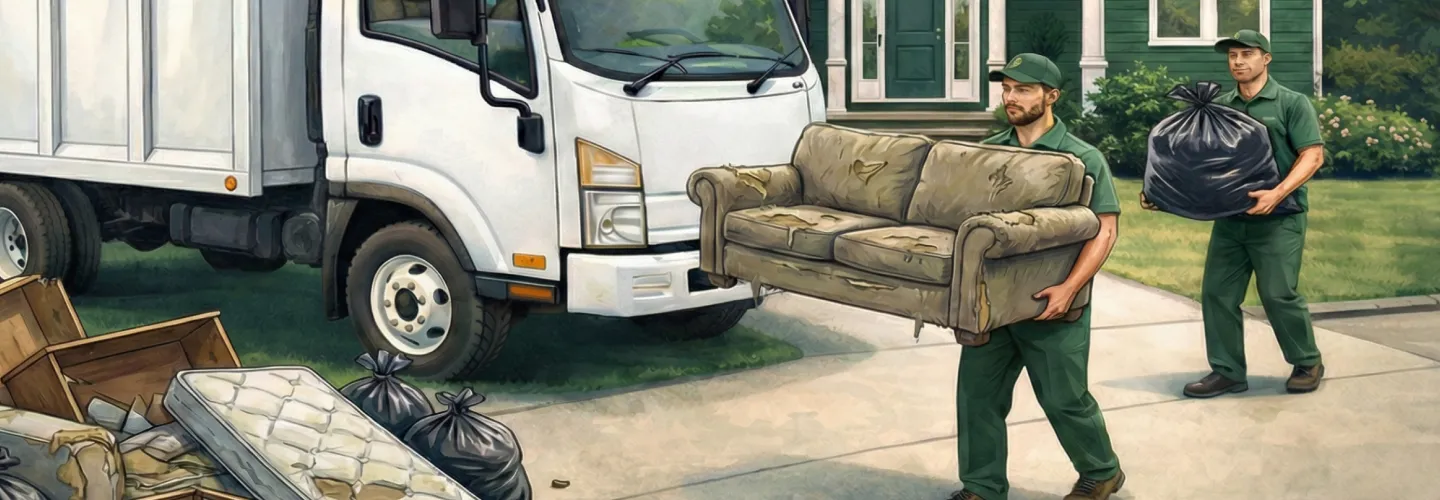
Dunwoody Appliance Removal Services
Choose us for hassle-free appliance removal—our experienced team ensures safe, eco-friendly disposal and same-day service, making it easy to reclaim your space without lifting a finger.
Get a Free QuoteOur Dunwoody Junk Removal Services
Appliance Removal in Dunwoody, GA – Local Service Guide
Appliance removal in Dunwoody, GA, is often prompted by seasonal upgrades, home renovations, or life events such as moving or estate cleanouts. In neighborhoods like Georgetown and Wyntercreek, residents typically schedule appliance removal during spring cleaning or after major storms, when old refrigerators, washers, or ovens need to be replaced. Local disposal options include donation to area charities, recycling through municipal programs, or professional hauling services that ensure responsible handling. Access considerations—such as narrow driveways or multi-story homes—can affect logistics, especially during rainy seasons or in areas with dense tree coverage. For commercial properties in Dunwoody Village or Perimeter Center, appliance removal is often coordinated around business hours to minimize disruption, with larger volumes and stricter timing requirements. Specialty scenarios, such as construction debris or estate cleanouts, require advance planning and coordination with local authorities to comply with city guidelines. For more information on local rules and resources, visit the Dunwoody Public Works Department.
Key Considerations for Appliance Removal in Dunwoody
- Timing removals around seasonal cleanouts or property transitions
- Checking for required permits or city guidelines
- Choosing proper disposal or recycling channels
- Ensuring clear access for removal teams, especially in older neighborhoods
- Coordinating with property managers for commercial or multi-unit sites
- Managing volume and category-specific items (e.g., large appliances, hazardous components)
Benefits of Appliance Removal in Dunwoody
Fast and Reliable Service
Eco-Friendly Disposal
Licensed and Insured Team
Upfront Transparent Pricing
Convenient Scheduling Options
Safe Appliance Handling
Coordinating Appliance Removal with DeKalb County Sanitation Services for Dunwoody Residents
Dunwoody is an incorporated city within DeKalb County, and residential solid waste collection—including bulky appliance pickup—is administered through DeKalb County Sanitation Division. Residents seeking to dispose of large household appliances such as refrigerators, washing machines, dryers, dishwashers, and stoves must coordinate with the county's bulk item collection program. Key requirements include:
- Scheduling: Residents must call to schedule a bulk pickup appointment; appliances left curbside without prior arrangement may result in code enforcement action
- Preparation: Appliances must be placed at the curb or designated collection point; doors on refrigerators and freezers should be removed or secured shut for safety
- Item limits: Bulk pickups typically allow a limited number of items per scheduled collection
- Eligible appliances: Refrigerators, freezers, ranges, ovens, dishwashers, water heaters, washers, and dryers
- Prohibited placement: Appliances may not be placed in rights-of-way, storm drains, or public park areas
Residents should also consult the Dunwoody Public Works Department for guidance on stormwater compliance when staging appliances outdoors, as leaking fluids can contaminate drainage systems.
Dunwoody Public Works Department
4800 Ashford Dunwoody Road, Dunwoody, GA 30338
Phone: (678) 382-6850
Official Website: Dunwoody Public Works Department
EPA Refrigerant Recovery Requirements for Appliance Disposal in Dunwoody
Federal law strictly regulates the disposal of appliances containing refrigerants, including refrigerators, freezers, air conditioning units, and dehumidifiers. Under EPA Section 608 regulations, refrigerants such as R-12, R-22, R-134a, and R-410A must be properly recovered by an EPA-certified technician before any appliance is scrapped, recycled, or sent to a landfill. Dunwoody residents and haulers must observe the following:
- Certified recovery: Only technicians holding EPA Section 608 certification may extract refrigerants from cooling appliances
- Documentation: Proof of refrigerant recovery must be maintained; improper venting carries federal penalties up to $44,539 per day per violation
- Applicable appliances: Refrigerators, freezers, window air conditioners, dehumidifiers, and any unit containing a sealed refrigerant circuit
- Scrap metal facilities: Recyclers accepting appliances in the DeKalb County area are required to verify refrigerant removal before processing
- Mercury switches: Older chest freezers and pre-2006 appliances may contain mercury tilt switches, which must be removed and handled as hazardous waste
The Georgia Environmental Protection Division oversees enforcement of state-level solid waste and hazardous material regulations that complement these federal requirements.
Georgia Solid Waste Management Act Compliance for Appliance Disposal
Georgia's Solid Waste Management Act (O.C.G.A. § 12-8-20 et seq.) establishes the regulatory framework governing how appliances and other bulky waste must be handled, transported, and disposed of throughout the state, including Dunwoody. The Act requires that all solid waste haulers operating within Georgia hold proper permits and transport materials only to authorized facilities. Key compliance points for appliance removal include:
- Permitted facilities: Appliances must be delivered to state-permitted landfills, transfer stations, or licensed scrap metal recyclers—not abandoned on vacant lots or in waterways
- Hauler requirements: Commercial appliance removal operators must maintain valid solid waste handling permits issued by the Georgia EPD
- Illegal dumping penalties: Improper disposal of appliances carries fines and potential criminal charges under Georgia law
- White goods classification: Large household appliances are classified as "white goods" under Georgia regulations and are subject to specific recycling and disposal protocols
- Landfill restrictions: Many Georgia landfills require that refrigerant-containing appliances have documented proof of refrigerant recovery before acceptance
Georgia Environmental Protection Division – Solid Waste Program
2 Martin Luther King Jr. Drive SE, Suite 1054, Atlanta, GA 30334
Phone: (404) 656-4713
Official Website: Georgia Environmental Protection Division
Dunwoody Building Code and Permit Considerations for Appliance Removal Projects
When appliance removal is part of a larger kitchen or laundry renovation, Dunwoody's Community Development Department may require building permits and inspections. Removing built-in appliances—such as wall ovens, cooktops, or hardwired dishwashers—often involves disconnecting gas lines, electrical circuits, or plumbing, all of which trigger permit and code requirements. Residents and contractors should be aware of the following:
- Gas disconnection: Disconnecting gas ranges or dryers requires a licensed plumber and may require a gas permit; improper disconnection poses explosion and carbon monoxide risks
- Electrical work: Hardwired appliances (built-in ovens, cooktops, trash compactors) require an electrical permit for disconnection or circuit modification
- Plumbing: Removing dishwashers, washing machines, or ice makers involves water supply and drain line capping, which may require plumbing permits
- Pre-1978 buildings: Renovation work in older Dunwoody homes may disturb lead paint, requiring compliance with the EPA Renovation, Repair, and Painting Rule
- Inspection scheduling: Permit holders must schedule inspections through the Dunwoody Building Codes division before closing walls or completing work
Dunwoody Community Development – Building Codes
4800 Ashford Dunwoody Road, Dunwoody, GA 30338
Phone: (678) 382-6800
Official Website: Dunwoody Building Codes
Appliance Recycling and Scrap Metal Recovery Options Serving Dunwoody
Recycling old appliances diverts significant material from landfills and supports Dunwoody's broader sustainability goals as outlined by the Dunwoody Sustainability Committee. Most large household appliances are composed of 60–75 percent recyclable steel, along with recoverable copper, aluminum, and plastics. Dunwoody residents have several pathways for responsible appliance recycling:
- Scrap metal recyclers: Licensed scrap yards in the greater DeKalb County and metro Atlanta area accept washers, dryers, stoves, and water heaters; some offer free pickup for multiple units
- Retailer take-back programs: Many appliance retailers offer haul-away of old units upon delivery of new purchases, typically for a nominal fee
- Habitat for Humanity ReStore: Functioning appliances in good condition may be donated to local ReStore locations, which accept refrigerators, stoves, washers, and dryers that are clean and in working order
- Stormwater protection: When staging appliances outdoors before pickup, residents should place units on impervious surfaces and away from storm drains to prevent fluid contamination, per Dunwoody Stormwater Division guidelines
- Hazardous components: Capacitors in older air conditioners and microwave ovens may contain PCBs; these must be handled by licensed hazardous waste professionals
What Neighborhoods Do We Serve Throughout Dunwoody, GA?
- Georgetown: This established single-family neighborhood features homes built in the 1970s–1980s, many with original kitchen and laundry appliances due for replacement. Standard driveway access and cul-de-sac layouts accommodate removal trucks, though older gas connections may require professional disconnection.
- Dunwoody Village: A mixed residential and commercial area near the historic village center. Townhomes and condominiums in this area may present narrow hallway and stairwell challenges when removing large refrigerators or washers from upper-level units.
- Winters Chapel: Homes in this area range from mid-century ranch-style to newer construction. Appliance removal crews should note that some properties have steep driveways and limited turnaround space for larger vehicles.
- Branches: This subdivision of single-family homes features wide streets and accessible driveways. HOA regulations may require advance notification before staging appliances curbside for pickup.
- Jett Ferry: A well-established neighborhood with larger homes that frequently undergo kitchen renovations. Built-in appliance removal—including double wall ovens and commercial-style ranges—may require additional labor and specialized handling.
- North Shallowford: This area includes a mix of apartment complexes and single-family residences. Multi-unit apartment buildings require coordination with property management for service elevator access and loading zone scheduling when removing multiple appliances.